Passing Through the Gateless Barrier
By Guo Gu
The classic thirteenth-century collection of Zen koans with one of the most accessible commentaries to date, from a Chinese Zen teacher.
Gateways to awakening surround us at every moment of our lives. The whole purpose of kōan (gong’an, in Chinese) practice is to keep us from missing these myriad opportunities by leading us to certain gates that have traditionally been effective for people to access that marvelous awakening. The forty-eight kōans of the Gateless Barrier (Chinese: Wumenguan; Japanese: Mumonkan) have been waking people up for well over eight hundred years. Chan teacher Guo Gu provides here a fresh translation of the classic text, along with the first English commentary by a teacher of the Chinese tradition from which it originated. He shows that the kōans in this text are not mere stories from a distant past, but are rather pointers to the places in our lives where we get stuck—and that each sticking point, when examined, can become a gateless barrier through which we can enter into profound wisdom.
PRAISE
“A must-read book on a classic text. Zen is originally a Chinese tradition, and Guo Gu brings the ancient spirit of the old masters alive right now. There is an expansiveness, ease, and practicality that makes the ancient text encouraging, and it’s imaginative and hip too. A pleasure to read. “—John Tarrant, author of Bring Me the Rhinoceros
“Many translations of these ancient and profound teachings from a Japanese Zen perspective already exist. Why another one? We are fortunate to have this first Chan translation directly from the Chinese. In addition, Guo Gu’s beautifully written commentary includes insights from long ago that are of immense help as we reflect on how we actually live today. An invaluable guide for all meditators. “—Larry Rosenberg, author of Three Steps to Awakening
“A very helpful guide to the investigation of the Zen kōan from a perspective not yet widely known in the West. Guo Gu is a worthy heir to the great Chan master Sheng Yen. He provides lucid comments on each of the cases in the classic kōan collection the Gateless Gate, inviting us into our own intimate encounter with Zen’s ancestors and our own personal experience of the great matter of life and death. Anyone interested in understanding what a kōan really is, how it can be used, and how it uses us, will be informed and enriched by this book. I highly recommend it. “—James Ishmael Ford, author of If You’re Lucky, Your Heart Will Break: Field Notes from a Zen Life
“Guo Gu’s translation of The Gateless Barrier and his commentary reveal a fresh, eminently practical approach to the famous text. Reminding again and again that it is the reader’s own spiritual affairs to which each kōan points, Guo Gu writes with both broad erudition and the profound insight of a Chan practitioner. In this way, he reveals himself to be a worthy inheritor of his late Master Sheng Yen’s teachings. Zen students, called upon to give life to these kōans within their own practice, will find Passing Through the Gateless Barrier a precious resource. “—Meido Moore, abbot of Korinji Zen monastery
Product Information
Product Information
Shipping & Returns
Shipping & Returns
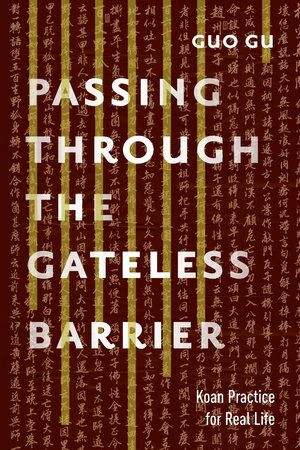
Passing Through the Gateless Barrier
Passing Through the Gateless Barrier
By Guo Gu
The classic thirteenth-century collection of Zen koans with one of the most accessible commentaries to date, from a Chinese Zen teacher.
Gateways to awakening surround us at every moment of our lives. The whole purpose of kōan (gong’an, in Chinese) practice is to keep us from missing these myriad opportunities by leading us to certain gates that have traditionally been effective for people to access that marvelous awakening. The forty-eight kōans of the Gateless Barrier (Chinese: Wumenguan; Japanese: Mumonkan) have been waking people up for well over eight hundred years. Chan teacher Guo Gu provides here a fresh translation of the classic text, along with the first English commentary by a teacher of the Chinese tradition from which it originated. He shows that the kōans in this text are not mere stories from a distant past, but are rather pointers to the places in our lives where we get stuck—and that each sticking point, when examined, can become a gateless barrier through which we can enter into profound wisdom.
PRAISE
“A must-read book on a classic text. Zen is originally a Chinese tradition, and Guo Gu brings the ancient spirit of the old masters alive right now. There is an expansiveness, ease, and practicality that makes the ancient text encouraging, and it’s imaginative and hip too. A pleasure to read. “—John Tarrant, author of Bring Me the Rhinoceros
“Many translations of these ancient and profound teachings from a Japanese Zen perspective already exist. Why another one? We are fortunate to have this first Chan translation directly from the Chinese. In addition, Guo Gu’s beautifully written commentary includes insights from long ago that are of immense help as we reflect on how we actually live today. An invaluable guide for all meditators. “—Larry Rosenberg, author of Three Steps to Awakening
“A very helpful guide to the investigation of the Zen kōan from a perspective not yet widely known in the West. Guo Gu is a worthy heir to the great Chan master Sheng Yen. He provides lucid comments on each of the cases in the classic kōan collection the Gateless Gate, inviting us into our own intimate encounter with Zen’s ancestors and our own personal experience of the great matter of life and death. Anyone interested in understanding what a kōan really is, how it can be used, and how it uses us, will be informed and enriched by this book. I highly recommend it. “—James Ishmael Ford, author of If You’re Lucky, Your Heart Will Break: Field Notes from a Zen Life
“Guo Gu’s translation of The Gateless Barrier and his commentary reveal a fresh, eminently practical approach to the famous text. Reminding again and again that it is the reader’s own spiritual affairs to which each kōan points, Guo Gu writes with both broad erudition and the profound insight of a Chan practitioner. In this way, he reveals himself to be a worthy inheritor of his late Master Sheng Yen’s teachings. Zen students, called upon to give life to these kōans within their own practice, will find Passing Through the Gateless Barrier a precious resource. “—Meido Moore, abbot of Korinji Zen monastery
Product Information
Product Information
Shipping & Returns
Shipping & Returns
Description
By Guo Gu
The classic thirteenth-century collection of Zen koans with one of the most accessible commentaries to date, from a Chinese Zen teacher.
Gateways to awakening surround us at every moment of our lives. The whole purpose of kōan (gong’an, in Chinese) practice is to keep us from missing these myriad opportunities by leading us to certain gates that have traditionally been effective for people to access that marvelous awakening. The forty-eight kōans of the Gateless Barrier (Chinese: Wumenguan; Japanese: Mumonkan) have been waking people up for well over eight hundred years. Chan teacher Guo Gu provides here a fresh translation of the classic text, along with the first English commentary by a teacher of the Chinese tradition from which it originated. He shows that the kōans in this text are not mere stories from a distant past, but are rather pointers to the places in our lives where we get stuck—and that each sticking point, when examined, can become a gateless barrier through which we can enter into profound wisdom.
PRAISE
“A must-read book on a classic text. Zen is originally a Chinese tradition, and Guo Gu brings the ancient spirit of the old masters alive right now. There is an expansiveness, ease, and practicality that makes the ancient text encouraging, and it’s imaginative and hip too. A pleasure to read. “—John Tarrant, author of Bring Me the Rhinoceros
“Many translations of these ancient and profound teachings from a Japanese Zen perspective already exist. Why another one? We are fortunate to have this first Chan translation directly from the Chinese. In addition, Guo Gu’s beautifully written commentary includes insights from long ago that are of immense help as we reflect on how we actually live today. An invaluable guide for all meditators. “—Larry Rosenberg, author of Three Steps to Awakening
“A very helpful guide to the investigation of the Zen kōan from a perspective not yet widely known in the West. Guo Gu is a worthy heir to the great Chan master Sheng Yen. He provides lucid comments on each of the cases in the classic kōan collection the Gateless Gate, inviting us into our own intimate encounter with Zen’s ancestors and our own personal experience of the great matter of life and death. Anyone interested in understanding what a kōan really is, how it can be used, and how it uses us, will be informed and enriched by this book. I highly recommend it. “—James Ishmael Ford, author of If You’re Lucky, Your Heart Will Break: Field Notes from a Zen Life
“Guo Gu’s translation of The Gateless Barrier and his commentary reveal a fresh, eminently practical approach to the famous text. Reminding again and again that it is the reader’s own spiritual affairs to which each kōan points, Guo Gu writes with both broad erudition and the profound insight of a Chan practitioner. In this way, he reveals himself to be a worthy inheritor of his late Master Sheng Yen’s teachings. Zen students, called upon to give life to these kōans within their own practice, will find Passing Through the Gateless Barrier a precious resource. “—Meido Moore, abbot of Korinji Zen monastery